
.avif)
North East Asia
North East Asia

Ocean freight rates
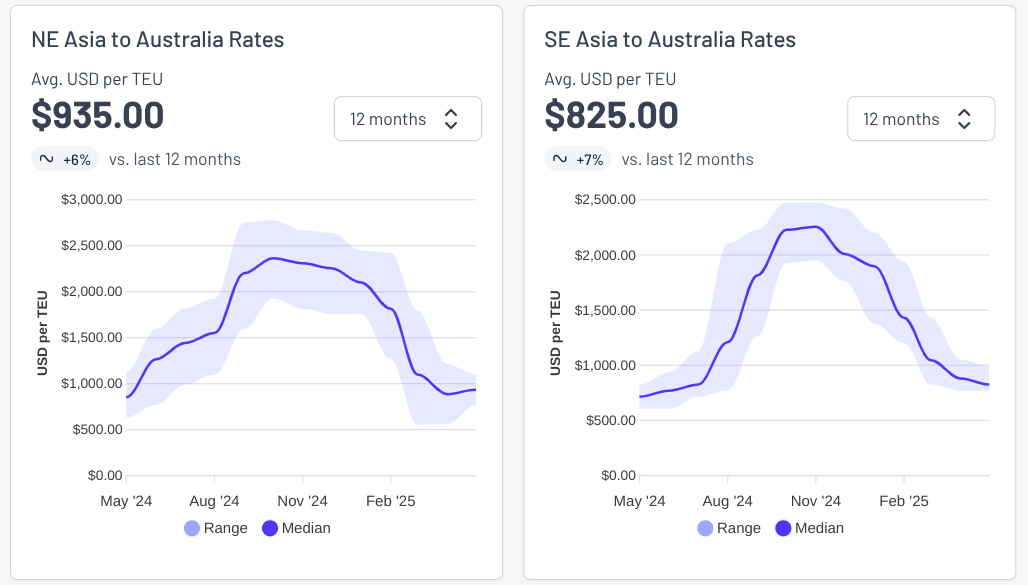
- The Northeast Asian market has been fluid in the past few weeks, with regular rate updates from all shipping lines.
- Carriers attempted to implement a full General Rate Increase (GRI) of USD 300.00 per TEU on April 1st, however, this was unsuccessful.
- While many vessels were withdrawn from service, some carriers remain uncertain about market conditions heading into late April due to a lack of NAC deals. If pessimism spreads, rates may gradually decline.
- NEAX (A1X) : Although not classified as a premium service, it is a high-tier offering in the CN-AU trade lane. Rates are set at USD 900.00 per TEU from TAO/SHA/NGB/SZX to SYD/MEL/BNE.
- TSL/PIL/YML – Economy Services (CAT & CA2): These carriers have aligned their rates, setting USD 900.00 per TEU from April 1st to 14th. It remains to be seen whether market conditions will pressure them to adjust rates further.
- Premium Services: These carriers have increased rates to USD 1000.00 per TEU from all China base ports to AUEC hubs. Given the volume of rolled shipments from late March, these rates are expected to hold steady, even if others adjust slightly.
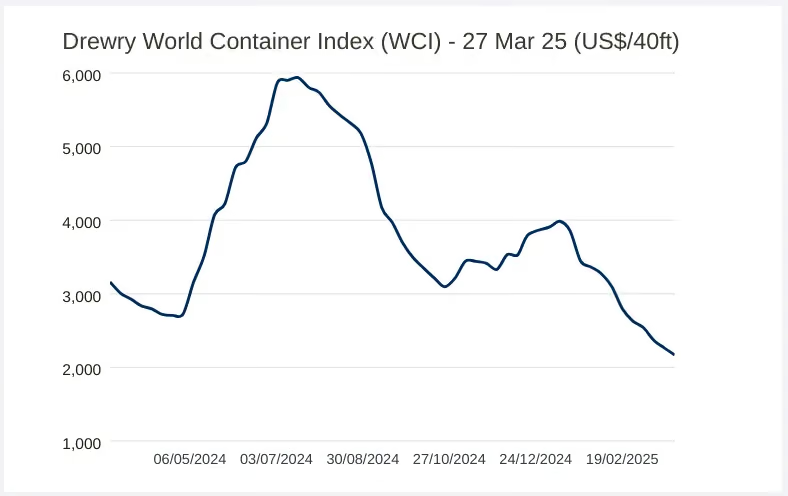
- The Drewry WCI composite index dropped 4% to $2,168 per 40ft container, marking a 79% decline from the pandemic peak of $10,377 in September 2021 and the lowest level since January 2024. Despite this, the index remains 53% higher than the pre-pandemic average of $1,420 in 2019.
General Rate Increases (GRIs)
- MSC: USD 300.00 per TEU increase for all cargo from China, Hong Kong, Japan, Korea and Taiwan to Australia and New Zealand. Effective date: 15th April 2025
- ANL: USD 300.00 per TEU increase for all cargo from Northeast Asia to the Australian East Coast. Effective date: 15th April 2025.
Capacity and schedule reliability
Capacity
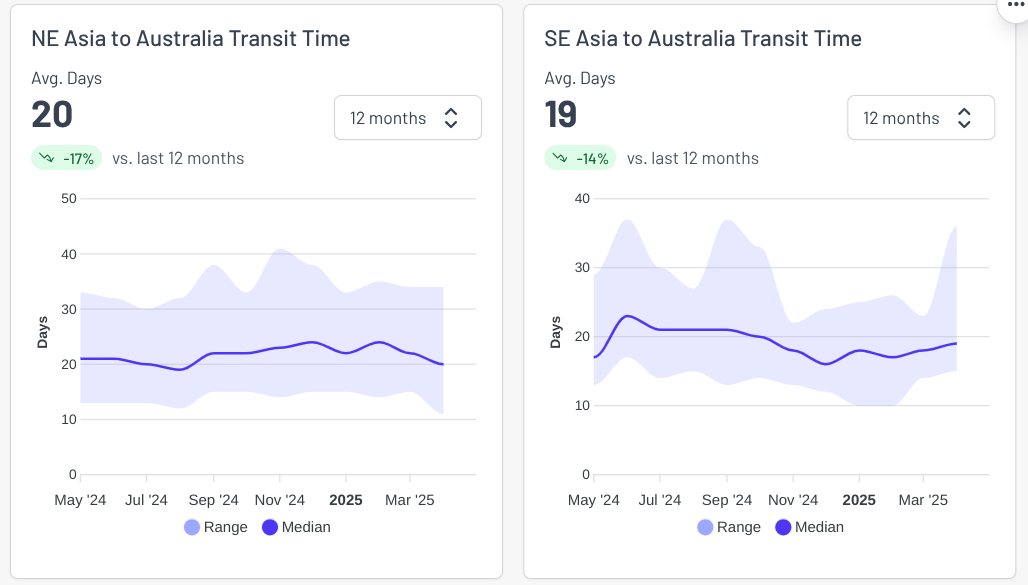
- Sailing Grid Constraints: Total physical slot availability out of North Asian origins constricted rapidly due to aggressive blank sailing programs deployed by carrier alliances across Weeks 12 and 13. Labor Day Holiday Surge: In anticipation of China's upcoming Labour Day holiday (May 1–5), vessel capacity is filling rapidly across all major gateways, with multiple mid-to-late April sailings already heavily overbooked. Capacity constraints are expected to intensify sharply during the second half of the month. Northeast Asia Equipment Shortages: Structural container imbalances have triggered critical shortages of 40-foot container equipment across key Chinese export nodes, specifically impacting:
- Yantian
- Xiamen
- Qingdao
- The PANDA Service: Scheduled to execute full blank sailings in Weeks 14 and 17.
- The A3 / JKN Service: Set to blank sail simultaneously in Weeks 14 and 17.
- The CA2 Service: Scheduled to implement a blank sailing in Week 16.
- The CAT Service: Positioned to blank sail downstream during Weeks 18 and 19.
Schedule reliability
- The Origin Roll Pool Logjam: Due to the severe blank sailings carried out back-to-back in Weeks 12 and 13, the market is dealing with significant hub congestion. The resulting cargo "roll pool" (backlog of un-uplifted containers) is severe, forcing standard spot bookings into minimum delays of approximately two weeks.
- Weather Stoppages: Prolonged adverse weather patterns and heavy sea fronts sweeping across Northeast China have forced rolling operational pauses, disrupting carrier arrival and departure rotations.
- Ningbo Terminal Rotation Congestion: Landside efficiency at the Port of Ningbo has deteriorated due to a structural alliance berth shift. Following an adjustment active since late February, the A3C service was permanently re-routed from the Ningbo Meishan Terminal over to the Beilun Phase 3 Terminal. Because the CAT and NAX services utilize this exact same terminal simultaneously, the overlapping loops have bottlenecked terminal operations, choked container flow, and drastically extended vessel waiting times.
South East Asia
South East Asia
.avif)
Ocean freight rates
- Spot Market Stability: Freight rates running out of Southeast Asian hubs have flattened out relative to the sharp upward adjustments seen in North China, moving closer to contract parity due to steadier regional manufacturing demand.Specific Origin Price Points (First-Half April):
- Vietnam: Base spot rates are floating between USD 700.00 – 1,100.00 per TEU.
- Indonesia: Spot pricing trades at USD 800.00 – 1,200.00 per TEU.
- Malaysia: Freight rates are landing firmly at USD 800.00 – 1,100.00 per TEU.
- Singapore: Hub pricing matches at USD 800.00 – 1,100.00 per TEU.
- Thailand: Export slots are pricing between USD 800.00 – 1,100.00 per TEU.
Capacity and schedule reliability
Capacity
- Stable Supply Footprint: Unlike the erratic blank sailing patterns disrupting China's main load gates, capacity exiting core South East Asian manufacturing zones remains fundamentally stable on paper, supported by reliable weekly feeder sailings.Uplift Reliability: Shippers utilising regional origins are experiencing no systemic or widespread container uplift issues at immediate origin gates, with physical hull space readily available for standard local bookings.Penang Equipment Deficits: Localised equipment supply lines have broken down in Malaysia, with carriers tracking acute, critical container equipment shortages specifically localized at the Port of Penang (MY). South East Asia Alliance Blank Sailing Schedule:
- The Wallaby Service: Scheduled to implement a full blank sailing in Week 15.
- The AUN Service: Confirmed to blank sail in Week 15.
Schedule reliability
- Hub Delays & Stacking Density: While cargo flows smoothly out of local local regional factories, downstream transit reliability remains highly variable due to intense operational delays and severe container stacking density at the region's primary transhipment hubs—specifically at the Port of Singapore and Port Klang (Malaysia).
- The Transhipment Buffer Necessity: Vessel bunching and erratic, delayed arrival windows at these primary regional connection points mean that transhipment cargo filtering from outports face unpredictable connecting timelines. Logistic networks are advised to build wider buffer windows into their forward inventory delivery schedules to absorb these hub delays.
North America
North America

Ocean rates
- Rates on the TPEB (Asia to USA) trade have slowed, stabilizing at current levels.
- Carriers have confirmed their planned rate adjustments for April with advertised GRIs.
- Shanghai to Los Angeles: ↓6% ($171) to $2,487
- Shanghai to New York: ↓4% to $3,622
- Los Angeles to Shanghai: ↑1% ($7) to $709
Capacity
- March demand on the TPEB (Asia to USA) trade has remained flat, with no significant growth following the Chinese New Year. Capacity and equipment are readily available.
Schedule Reliability
- Location-specific issues:
- Chicago: Limited availability of 20' and 40' chassis.
- Denver & Indianapolis: Slow arrivals from Los Angeles/Long Beach.
- Long Beach: Terminal access delays and difficulty terminating units.
- Metro NJ/NYC: Constrained 20', 40', and 45' chassis; slow-moving rail cars.
- Nashville & St. Louis: Limited chassis availability (40' in Nashville, 20' in St. Louis).
Port-Specific Updates
- Savannah:
- Berthing delays of 3-4.5 days.
- Import dwell time: 4.5 days; rail dwell time: 1.1 days.
- Oakland:
- TraPac Terminal: Import deliveries taking up to 5 days.
- OICT Terminal: Import deliveries averaging 4 days.
- Empty return appointments are difficult due to space constraints.
- Line-haul freight pickup and delivery delayed 24-48 hours.
- Norfolk:
- Berthing delay: Up to 24 hours.
- Berthing delay: Up to 24 hours.
- New York / New Jersey (Terminal Capacity Alert):
- Berthing delay: Up to 2 days.
- Severe chassis shortages and additional storage/usage charges expected.
Congestion across all terminals; empty returns restricted due to terminal overcapacity (notably APM Terminals Elizabeth & Hapag Lloyd locations). - Appointment system mandatory for APM and GCT terminals, but availability is limited.
- Chassis location backups, especially at Columbia.
- Miami / Port Everglades:
- Congestion expected.
- Genset shortages impacting deliveries.
- FIT Terminal experiencing heavy delays due to closures.
- SFCT delays from containers stuck in closed/stacked areas.
- Houston:
- Berthing delays: Up to 2.5 days at Barbour’s Cut Terminal; no delays at Bayport Terminal.
- Import dwell time: 3.8 days (Barbour’s Cut), 3.7 days (Bayport).
- Charleston:
- Berthing delays: Up to 24 hours at Wando Welch Terminal; 6 hours at North Charleston Terminal.
- Canadian terminals are experiencing delays due to severe weather conditions, with Vancouver being the most impacted. Vessel waiting times average around four days, while rail dwell has extended to 13 days, causing further disruptions to cargo movement.
US Tariffs
Tariffs on Automobiles and Auto Parts: Beginning April 3, 2025, a 25% tariff will be imposed on imported passenger vehicles, including sedans, SUVs, crossovers, minivans, cargo vans, and light trucks, as well as key automobile parts such as engines, transmissions, powertrain parts, and electrical components. The administration asserts that these tariffs will encourage consumers to purchase American-made vehicles and strengthen the domestic automotive industry.
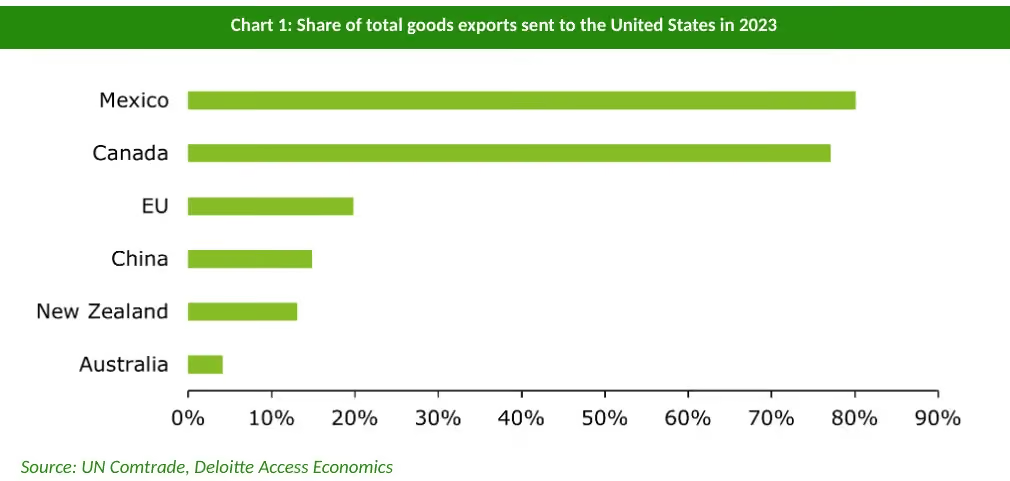
Compared to other countries, Australia is far less dependent on U.S. demand for its exports. For example, nearly 80% of total goods exports from Canada and Mexico are directed to the U.S., while the EU and China send approximately 20% and 15% of their exports, respectively. In contrast, only 4% of Australia’s total goods exports go to the U.S. Source: Deloitte
- Steel and aluminum exports to the U.S. make up less than 0.2% of Australia’s total goods exports. While tariffs on these products may impact certain domestic manufacturers, the overall economic effect is expected to be minimal. However, if U.S. tariffs were to be extended to agricultural and pharmaceutical exports, as has been suggested, the proportion of Australian goods exports affected could rise from 0.2% to as much as 1.5%. Source: Deloitte
- President Donald Trump is set to announce his controversial tariff plans on April 2.
- Meanwhile, the Trump administration has frozen several dozen research grants at Princeton University without providing a clear explanation, according to school president Christopher Eisgruber. This move is part of a broader crackdown on higher education institutions, with federal funding also suspended for Columbia University and the University of Pennsylvania, while Harvard’s contracts and grants are under review. The administration has accused some universities of failing to adequately address antisemitism.
- In another development, former Costa Rican President and Nobel laureate Óscar Arias revealed that the U.S. revoked his visa weeks after he criticized Trump on social media, comparing his actions to those of a "Roman emperor."
- On the international trade front, Israeli Finance Minister Bezalel Smotrich announced that he has begun efforts to eliminate remaining tariffs on U.S. imports, though final approval will be required from Economy Minister Nir Barkat.
- Additionally, Trump has finalized the tariff rates he plans to impose on global imports starting Wednesday. While reports suggest a 20% tariff on most imports, Press Secretary Leavitt declined to confirm the specific figures ahead of the official announcement. Source: USA Today
Europe
Europe
.png)
Ocean freight rates
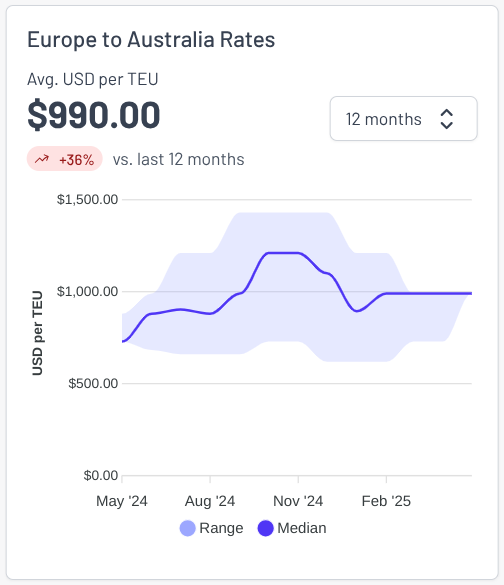
- Shanghai to Rotterdam: ↓4% to $2,370
- Shanghai to Genoa: ↓3% ($115) to $3,171
- Rotterdam to Shanghai: ↑3% ($16) to $500
- Rotterdam to New York: ↓7% ($154) to $2,162
- Pricing ex Europe to Australia remains stable and competitive, with levels approximately USD1100.00 per TEU for April.
Capacity and schedule reliability
Capacity
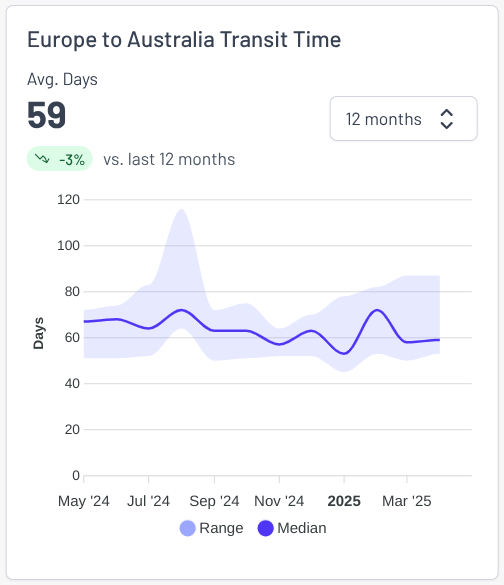
- Blank sailings decreased in March; however, April is expected to see an increase in Southern Europe due to ongoing congestion and vessel delays, particularly at Piraeus, Mersin, and Valencia. These disruptions are contributing to service delays across the region.
- Equipment shortages continue to affect parts of Central Europe, including Austria, Slovakia, Switzerland, Hungary, and Southern/Eastern Germany, where carrier haulage is recommended. Additionally, Mersin in the East Mediterranean is beginning to experience equipment constraints, further impacting logistics in the area.
Schedule reliability
- Severe congestion is disrupting ports across Europe, driven by a combination of new alliance vessel deployments, industrial action, adverse weather conditions, and overcrowded container yards. These factors are causing significant delays and operational challenges.
- A nationwide general strike is scheduled across Belgium on March 31, 2025, impacting various sectors, including port operations. The country's major ports—Antwerp, Ghent, and Zeebrugge—are expected to experience disruptions. Short work stoppages, ranging from 30 minutes to an hour, are anticipated at major terminals due to consultations with unions. Additionally, actions by personnel in the nautical chain, such as pilots, lock operators, radar stations, and fleet services, may cause further disruptions from 7:00 PM on March 30 until 7:00 AM on April 1. Source: Ports Europe
European Terminal Update
- Antwerp, Belgium:
- PSA 913: Yard utilization remains high (90–95%), reefers at 70–75%.
- PSA 869: Yard at 80–85%, reefers at 75–80%. Terminal operating efficiently despite high vessel volume.
- AGW: Yard improved to 65–70%, reefers stable at 60–65%. Normal operations resumed.
- Rotterdam, Netherlands:
- ECT: Yard at 80–85%, high berth utilization. Terminal deploying all resources to manage demand.
RWG: Yard at 75–80%, high feeder demand, no berth availability in coming weeks. - Delta II: Stable operations post-strike, no issues reported.
- ECT: Yard at 80–85%, high berth utilization. Terminal deploying all resources to manage demand.
- United Kingdom:
- Southampton (SOU): Yard at 85–90%, reefers at 50–55%. Full berth lineup but terminal handling demand well.
- London Gateway (LGP): Yard at 55–60%, reefers at 50–55%. Heavy vessel traffic, terminal operating efficiently.
- Hamburg, Germany:
- CTA: Yard at 75–80%, strong labor supply. Strikes in public sector avoided through interim measures.
- CTB: Yard at 80–85%, cargo delivery restrictions begin March 17 due to high volumes. Some fog-related disruptions but no lasting impact.
- Wilhelmshaven, Germany:
- CTW: Yard stable at 65–70%, all vessels handled efficiently. No issues reported.
- Le Havre, France:
- Ongoing strikes causing disruptions (4-hour stoppages multiple days per week).
- GMP Yard: High utilization (85–90%) with truck gates closed at times due to strikes.
- CNMP Yard: Stable at 50–55%, operational apart from strikes. Source: Hapag Lloyd
- Port congestion remains a challenge across Europe, with some ports managing demand well, while others face operational disruptions due to labor strikes and high vessel volumes.
Red Sea Update
- As of April 1, 2025, tensions in the Red Sea region have escalated due to ongoing attacks by Yemen's Iran-backed Houthi rebels on commercial shipping vessels. Since November 2023, the Houthis have targeted over 100 ships, resulting in the sinking of two vessels, the seizure of another, and the deaths of at least four seafarers.
- In response, the United States initiated a series of airstrikes against Houthi positions starting on March 15, 2025. President Donald Trump has vowed to continue these strikes until the Houthis cease their attacks on maritime traffic, emphasizing that the U.S. retaliation is just beginning.
- The Houthis have claimed responsibility for downing another U.S. MQ-9 Reaper drone in Yemen's Marib governorate amid the ongoing U.S. air campaign. They assert that the drone was targeted with a locally manufactured missile.
- These developments have significantly disrupted global shipping routes, with many vessels rerouting around the Cape of Good Hope to avoid the Red Sea, leading to increased costs and delays in international trade. This is set to continue in the short term until safety can be guaranteed.
Global air freight
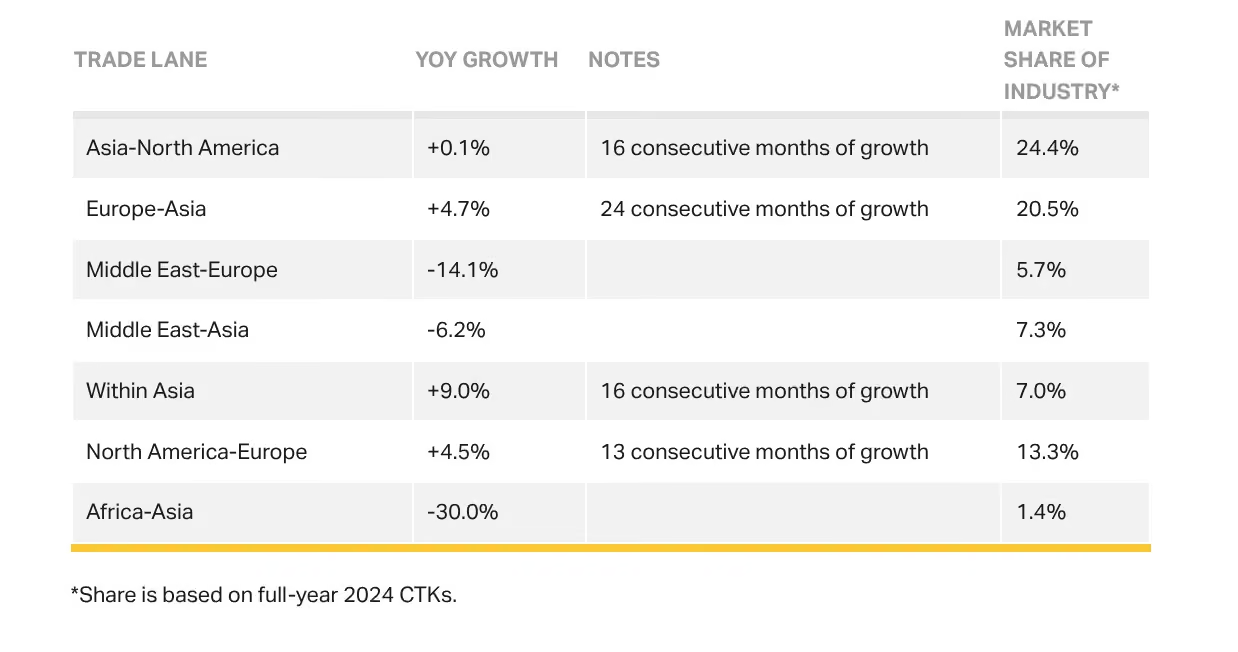
- Global Cargo-Tonne-Kilometers (CTK) saw a slight 0.1% year-over-year decline in February. Seasonally adjusted demand fell 0.6% from January 2025, though it remains 3.0% higher than 2024 levels.
- International CTK recorded a modest 0.4% increase, driven primarily by Asia-Pacific airlines.
- Global air cargo capacity (ACTK) dropped 0.4% YoY, while the Cargo Load Factor (CLF) rose 0.1 percentage points, reaching 45.0%.
- Jet fuel prices saw a 2.1% month-over-month decrease, while global air cargo yield declined 6.1% MoM, hitting a 12-month low. Source: IATA
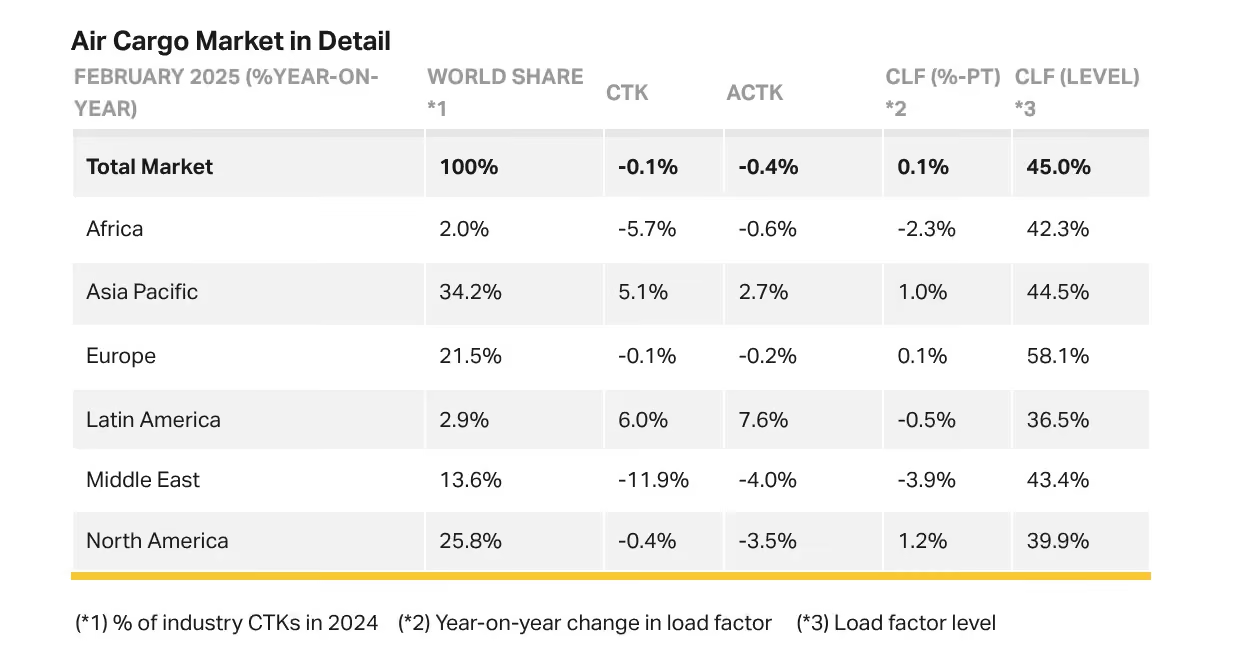
- Asia-Pacific airlines recorded a 5.1% year-over-year increase in air cargo demand, with capacity rising 2.7% YoY.
- North American carriers experienced a slight 0.4% decline in demand, while capacity contracted 3.5% YoY.
European airlines saw a 0.1% drop in demand, accompanied by a 0.2% decrease in capacity. - Middle Eastern carriers faced the steepest decline, with demand falling 11.9% YoY, while capacity dropped 4.0%.
- Latin American carriers led global growth, posting a 6.0% increase in demand and a 7.6% rise in capacity.African airlines saw a 5.7% decline in demand, with capacity slightly decreasing by 0.6%. Source: IATA
Australian Ports
- Ex-Tropical Cyclone Alfred has had a notable impact on Brisbane port operations. Four vessels scheduled to call at Brisbane during the cyclone canceled their calls, leading to prolonged delays for containers originally intended for discharge.
- While Brisbane Port has since recovered, DP World's No.7 crane is undergoing a six-week maintenance period, affecting loading and unloading operations.
- An accumulation of vessels awaiting berths has extended berthing wait times across key ports.
- The JKN service to New Zealand, which routes through Brisbane, has also been affected. Three vessels were suspended due to the cyclone in March and early April, resulting in constrained shipping capacity and a significant increase in freight rates to New Zealand.
- Terminal Congestion - Port of Brisbane;
- Wharf slot allocations may change frequently as we work closely with terminals to optimize coordination.
- Containers on bulk and stack runs are experiencing slower-than-usual discharge rates.
- Capacity for unscheduled container deliveries is significantly limited.
- This is due to an unexpected surge in volume across all services, impacting overall scheduling flexibility.
General news
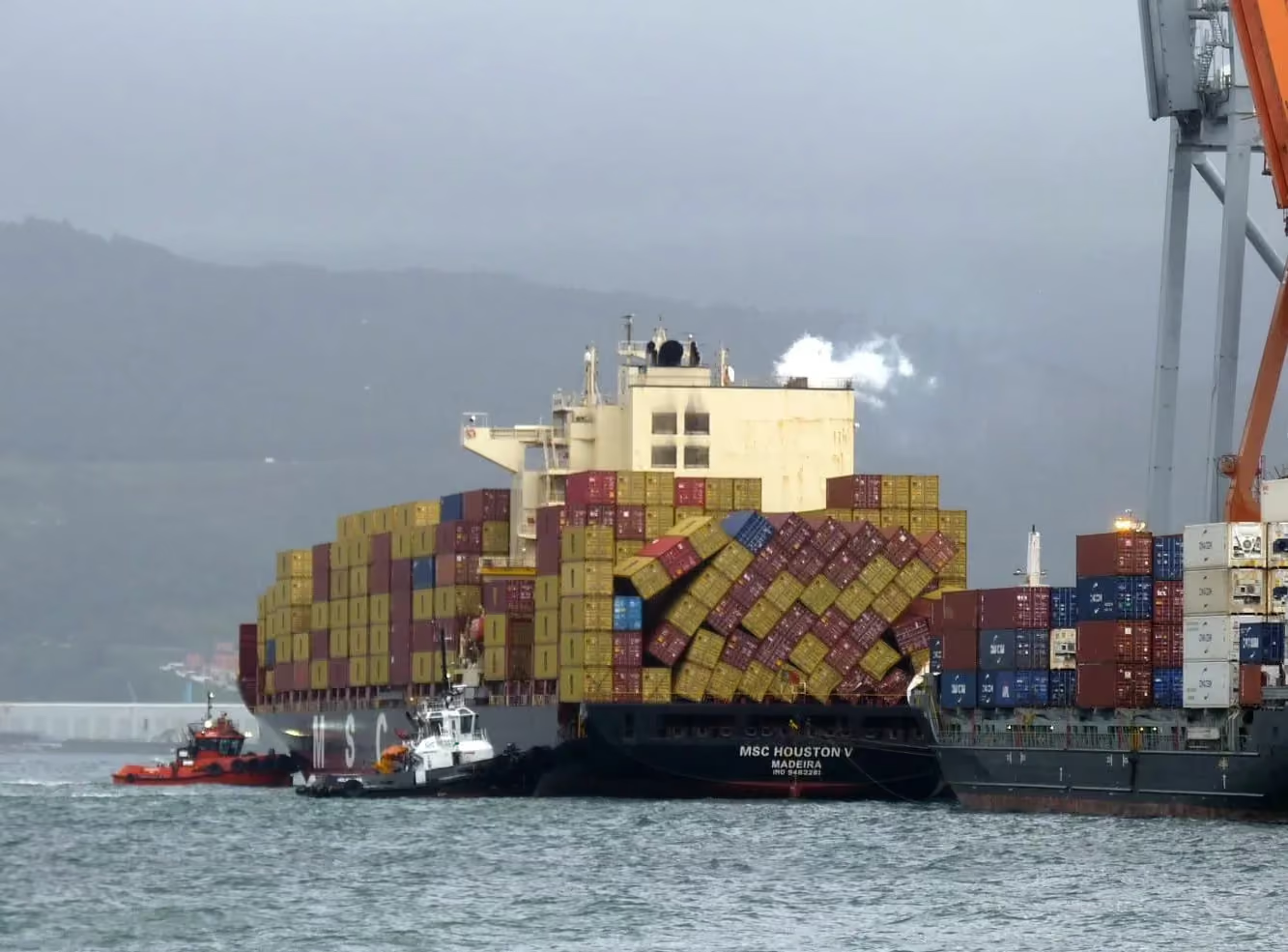
- The MSC Houston V, a Portugal-flagged container ship operated by MSC, was forced to make an emergency stop at the Port of Vigo in Galicia after encountering severe storm conditions on March 20, resulting in significant cargo shifting and deck damage. The 4,400 TEU vessel was sailing from Piraeus, Greece, to Liverpool, United Kingdom, when it was caught in rough seas and wind gusts reaching 90 km/h as Storm Martinho swept through the waters off Cape St. Vincent on Thursday. Source: World Cargo News
- Effective April 1, 2025, the European Union will implement the next phase of its Import Control System 2 (ICS2), extending mandatory advance cargo information requirements to rail and road carriers. This enhancement aims to bolster the security and safety of goods entering or transiting through the EU by standardizing pre-arrival customs procedures across all transportation modes. Source: European Commission
- To comply with ICS2 requirements, affected businesses must:
- Collect accurate and complete data from clients.
- Update IT systems and operational processes.
- Provide adequate staff training.
- Complete a self-conformance test before connecting to ICS2, verifying their ability to access and exchange messages with customs authorities.
- The phased implementation of ICS2 underscores the EU's commitment to enhancing supply chain security and streamlining customs procedures across all transport sectors
- On March 28, 2025, a powerful 7.7-magnitude earthquake struck Myanmar's Sagaing Region near Mandalay, causing widespread devastation across the country and affecting neighboring Thailand and southwestern China. The quake resulted in over 3,000 fatalities in Myanmar and at least 19 in Thailand, with thousands more injured and many still unaccounted for.
- A large portion of North America is bracing for severe weather midweek, with multiple warnings in effect. A powerful storm system is expected to bring tornadoes and flooding across the central U.S., while the same low-pressure system will deliver additional snow and freezing rain to eastern Canada, which recently endured a major ice storm. Meanwhile, strong winds and low humidity linked to the storm will heighten wildfire risks in parts of the desert Southwest. Source: BBC
Interesting Articles
.avif)
Experienced Business Development Manager with a demonstrated history of working in the logistics and supply chain industry. Skilled in Import/Export, Freight Transportation, Freight, Warehouse Operations, and Overseas Networking.
Frequently Asked Questions
Explorate gives supply chain managers one real-time view across ever forwarder, lane and mode without replacing your current process, partners or systems.

